|
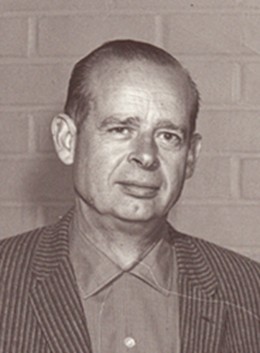
Doug Easton
|
|
1907 - 1972
Class of 1974
Contributor to the Sport, Influence on the Sport
When he was just 15 years old, Easton
became an archery enthusiast under fortuitous circumstances. In the autumn of 1921, he was hunting near his home in Watsonville,
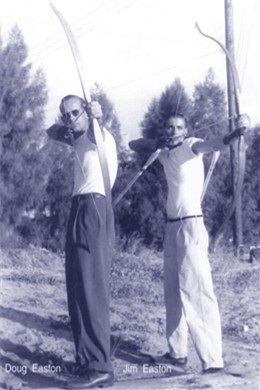
California, when a shotgun, propped up against a car, fell, discharged and seriously wounded him in both legs. For much of the next year, while recuperating, he was confined to the hospital and his home. To help him pass the time, a friend gave Easton a copy of a new book written by Dr. Saxton Pope, "Hunting with the Bow and Arrow". Easton became fascinated with archery and as soon as he was able, he began to craft bows from yew wood and wooden arrows from straight grained woods like cedar and pine. His excellent work was quickly recognized, especially his arrows, which were soon regarded as the best tournament arrows in the country.
At 17, while shooting a round of archery at San Francisco's Golden Gate Park, he met an older man who complimented him on his craftsmanship. Easton credited his work to a book written by Saxton Pope, only to learn moments later, when the man extended his hand, that he had been conversing with his mentor.
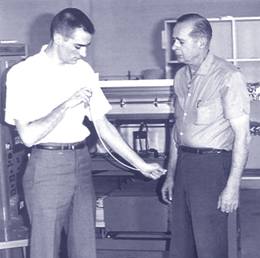 In 1922, Doug Easton began crafting custom wood bows and cedar arrows in Watsonville. Although he produced tournament grade cedar arrows for the archery champions of that era, he was frustrated with the inconsistency and lack of uniformity of wooden shafts. Doug turned his attentions to aluminum and in 1939 he began manufacturing aluminum arrows in Los Angeles, California.
His instincts about this material were correct and in 1941 a California archer by the name of Larry Hughes won the National Championship with a set of Doug's aluminum arrows, and the rest is history. In 1922, Doug Easton began crafting custom wood bows and cedar arrows in Watsonville. Although he produced tournament grade cedar arrows for the archery champions of that era, he was frustrated with the inconsistency and lack of uniformity of wooden shafts. Doug turned his attentions to aluminum and in 1939 he began manufacturing aluminum arrows in Los Angeles, California.
His instincts about this material were correct and in 1941 a California archer by the name of Larry Hughes won the National Championship with a set of Doug's aluminum arrows, and the rest is history.
Notes of Interest
Pioneer Manufacturer of Aluminum Arrow Shafting During 1940s; Set the Industry
Standard for Material Consistency in Mass Produced Target and Hunting Arrows
Influenced by the Writings of Saxton Pope, Took up Archery at 15 and in 1922 Began Producing and Selling Cedar Arrows and Custom Bows.
Introduced the First Easton
Aluminum Arrows in 1939
After Larry Hughes Won the 1941 National Archery Association Championship Shooting Easton’s Metal Arrows, the Popularity of Aluminum Shafting Quickly Spread and Grew During the Successive Decades
Recipient of the NAA’s Thompson Medal of Honor, 1972
Father of 1997 AHOF Inductee, James L. Easton
|
|
|
 |